


Playground Equipment for Daycares: Complete Buyer’s Guide
What is the best playground equipment for daycares?
The best playground equipment for daycares supports safe movement, early learning, and easy supervision. A strong daycare setup usually includes a balanced mix of climbers, low slides, balance features, sensory panels, imaginative play elements, and space for social play.
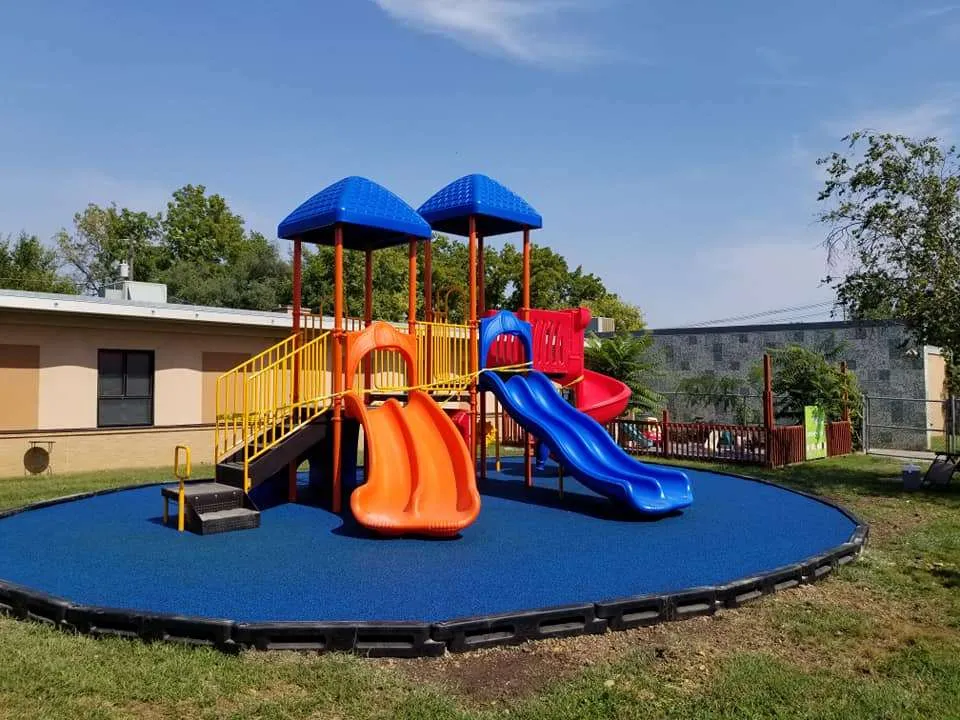
Not all playground equipment is fit for daycare settings. You need features that fit young children, support safe supervision, and work with how your space functions every day.
It also helps to know what to look for before you compare options, because the wrong equipment, layout or surfacing can create problems later.
This complete guide helps you choose and understand what makes the best playground equipment for daycares.
What should you consider when buying playground equipment for daycares?
When choosing playground equipment for daycares, consider the children’s ages, how staff will supervise them, how much space you have, and what kinds of play and learning the space should support. It is also important to plan for safe surfacing, shade, access, and a layout that works well every day.
Start with age and development
Playground equipment for daycares needs to fit toddlers and preschoolers, not older kids. Younger children need play features that match their strength and balance.
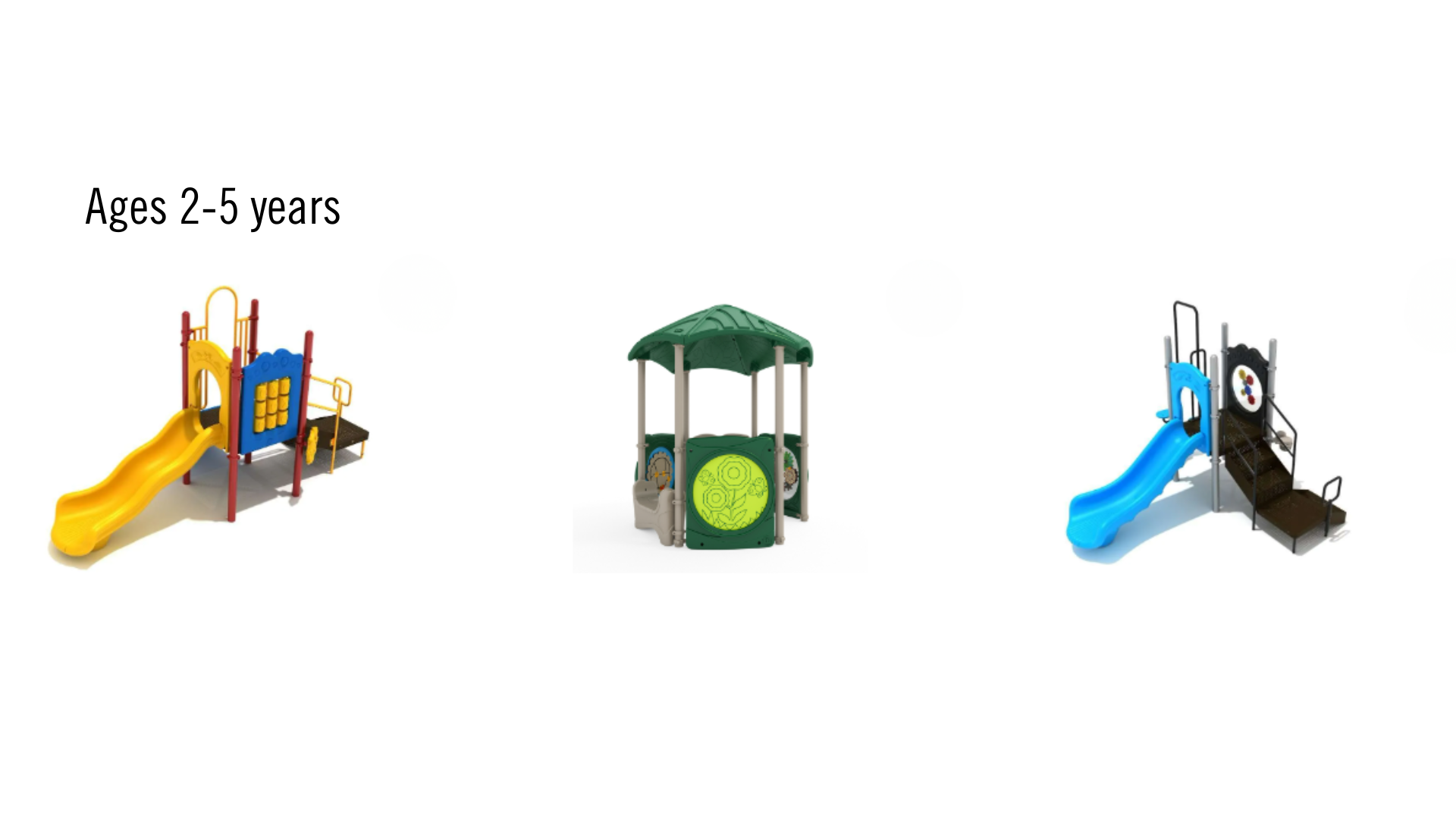
If you own a daycare serving preschool-age children, you can start by comparing preschool play structures for ages 2 to 5 before narrowing down your options.
If your program serves mixed age groups, it may also be worth comparing commercial play structures before finalizing your layout.
Recreation Installations’ commercial play structures per age group:

Plan for supervision and routines
A daycare playground needs to work well for staff every day. Teachers need clear sightlines so they can watch children, guide play and step in quickly when needed. The layout should also fit how your daycare moves groups in and out during the day. When the space matches real routines, outdoor time feels smoother and safer.
Assess space and layout
The size and shape of the site determine which equipment will work best. It is important to look at entry points, walking paths, fencing, and the open space children need to move safely.
A crowded layout can make supervision more difficult and reduce the safe space around equipment. A better plan is to choose features that fit the site rather than forcing too much into a single area.
Support early learning through play
A daycare playground should do more than keep children busy. It should also help children imagine, explore, move, and play with others.
Different play features support different parts of growth and learning. When the space is built for learning through play, outdoor time becomes more useful and meaningful.
Plan for surfacing, shade, and access
Plan for surfacing, shade, and access because the equipment is only one part of a safe daycare playground. Surfacing helps protect children when they fall, shade helps keep the space more comfortable, and access helps children and staff move through it more easily.
These features affect how the playground works every day. When they are planned early, the whole space feels safer, easier to use, and more complete.
Best features to look for in playground equipment for daycares
Once your daycare’s needs are clear, the next step is choosing the right mix of play features. The goal is not to pack in as many elements as possible. It is to build a space that supports different kinds of play while still feeling safe, open, and easy to use every day.
Movement-based play features
Movement-based play helps young children build coordination, strength, balance, and body awareness through daily use.
A strong daycare playground usually includes more than one type of movement features so children can climb, slide, swing, and explore in different ways.
The goal is to create age-appropriate challenges while keeping the space safe and manageable.
Look for features like:

Sensory and imaginative play features
A strong daycare playground should support more than just physical movement by providing opportunities for children to explore sound and texture, engage in pretend play and interact hands-on.
Look for features like:
- music panels
- tactile play elements
- themed features
- activity panels
These features help create a richer outdoor learning space and support different ways children play and learn. A playground with this kind of variety can feel more welcoming, more engaging and more useful for a wider range of learners.
Features that support social play
Your daycare playground should also help children learn how to play with others.
Features that support sharing, turn-taking, and side-by-side play can help children build communication and cooperation in natural ways.
That matters in early learning settings where social growth is part of the day.
Safety features to look for in playground equipment for daycares
Once you have a general idea of the play features you want, safety should shape which features stay on the shortlist. In daycare settings, that means looking closely at design, supervision, and the overall planning of the space. The goal is to ensure the challenge fits the age group and setting.
Know which safety standards should guide your choices
Before you look at specific safety features, it helps to know which safety standards shape the space as a whole. These standards can affect spacing, fall zones, surfacing, accessibility, and installation, which means they influence more than just the equipment itself.
At Recreation Installations, we work with trusted vendors who comply with or exceed national safety standards, helping daycares feel more confident in what they buy.
Standards and certifications to review may include:
- Consumer Product Safety Commission (CPSC) guidelines for public playground safety.
- International Play Equipment Manufacturers Association (IPEMA) third-party certification for public playground equipment.
- ASTM International F1487 standard for public-use playground equipment safety
- ASTM International F1292 standard for impact attenuation and fall height in playground surfacing.
- Americans with Disabilities Act (ADA) Standards for Accessible Design for accessible play structures and routes.
- ASTM International F1951 standard for accessible playground surfacing.
Age-fit design
Once you understand the safety standards for the space, the next step is to look at how the equipment is designed for younger children. A safe daycare playground equipment starts with a design that fits younger children.
Key features to look for include:
- lower deck heights
- manageable entry points
- guardrails and barriers
- smooth finishes and edges
These details help make the space easier for toddlers and preschoolers to use with confidence. When equipment is built for their size and ability level, it can reduce avoidable falls, frustration, and hesitation during play.
Layout with clear sightlines
A safer playground also depends on how clearly staff can see children across the space. Key layout features to look for include:
- open sightlines across the play area
- fewer hidden corners
- enough spacing between structures
- a layout that avoids crowded equipment clusters
When visibility is built into the layout, staff can supervise more easily and respond faster when needed. That can make the playground feel calmer, easier to manage, and safer for daily use at daycare.
Common mistakes to avoid when buying daycare playground equipment
Before you buy, it helps to know which mistakes can lead to choosing the wrong equipment. The wrong fit can create safety concerns, require extra upkeep, or result in a space that does not work well for young children. In most cases, the best choice is not the biggest or most exciting option. It is the one that fits your daycare’s age group, daily routines, and space.
Common mistakes to avoid include:
- Choosing equipment for older children: what works for elementary-age students may be too tall, too complex, or too challenging for toddlers and preschoolers.
- Trying to fit too much into one space: too many features can make the playground feel crowded and harder to supervise.
- Focusing too much on appearance: colors and themes matter less than safety, age fit, and daily function.
- Overlooking surfacing needs: the right equipment still needs surfacing that supports safer use, comfort, and accessibility.
- Ignoring accessibility: better equipment choices help more children join in and move through the space more easily.
- Underestimating maintenance: Some equipment and materials need more upkeep than others, which can affect long-term value.
The goal is to choose daycare playground equipment that works well for your children, your staff, and your site. When you focus on fit instead of volume, it becomes easier to make a smarter long-term decision.
Compare daycare playground equipment with more confidence
Once you know what your daycare needs are, the next step is to narrow your options in a more structured way. This helps you compare equipment based on fit, safety, and daily use instead of looks alone.
Use a comparison checklist.
A simple checklist can make equipment choices easier to manage. It helps you compare options side by side and spot which ones truly fit your daycare.
Use a checklist like this when comparing options:
- Age fit: Is it designed for toddlers and preschoolers?
- Safety: Does it include age-appropriate heights and barriers?
- Layout fit: Will it fit the space without crowding it?
- Supervision: Does it support clear sightlines for staff?
- Accessibility: Will it be easier for more children to use?
- Durability: Will it hold up well to frequent daily use?
Need help comparing playground equipment for daycares?
Recreation Installations helps daycare and early education centers compare trusted equipment options, review the full space, and narrow down what makes the most sense before the project moves forward.
Ask smart vendor questions.
Once you have a shortlist, the next step is asking better questions. This helps you judge fit, support, and long-term value, not just price.
Ask questions like these:
- Is this equipment a good fit for toddlers and preschoolers?
- How does it support safe supervision?
- What surfacing works best with this setup?
- What site prep or clearance is needed?
- What kind of maintenance should we expect?
- What support is available after installation?
Need one partner for planning and installation?
Recreation Installations helps clients compare equipment from trusted vendors, think through surfacing and layout, and move forward with a clearer plan for the full playground.
Work with professional installers to build a safer daycare playground
The outcome depends on more than choosing the right equipment.
Installation affects how the playground performs, how safe it feels, and how well it holds up over time. Even a strong plan can fall short when the work on the ground is not done correctly.
Why playground equipment installation matters
- Proper installation keeps the right spacing between playground features.
- It helps the site drain properly.
- It supports better surfacing performance over time.
- It helps the playground function as designed.
- Poor installation can make the space harder to supervise.
- It can also make the playground less comfortable and less durable.
- Installation plays a direct role in safety, quality, and long-term value.
Choose a partner who knows daycare spaces
When you’re choosing playground equipment for daycares, it helps to work with a partner who understands how early learning spaces need to function from day one.
Recreation Installations helps daycare and early education centers build playgrounds that are safe, practical, and built for long-term use.
Our strengths include:
- Industry experience since 1991
- Hands-on client support
- Professional installation expertise
Choose daycare playground equipment that supports safe early learning
The best daycare playground equipment should support safe play, early learning, and easy daily supervision.
At Recreation Installations, we help daycare and early education centers select equipment from trusted vendors and bring their spaces to life with professional playground installation services. The goal is simple: to help you build a playground that works well from day one and holds up over time.
View our playground installation projects.
FAQs
1. What is the best playground equipment for daycares?
The best playground equipment for daycares supports safe movement, early learning and easy supervision. Popular choices include low climbers, slides, balance features, sensory panels and imaginative play areas.
2. How do I choose safe playground equipment for toddlers and preschoolers?
Choose playground equipment designed for ages 2 to 5, with lower heights, guardrails, smooth edges and age-appropriate challenges. Clear sightlines and proper surfacing also help create a safer daycare space.
3. How much space does a daycare playground need?
The right amount of space depends on your site and the equipment you choose, but children need room to move safely around each feature. A layout that avoids crowding makes supervision easier and improves daily use.
4. Why is playground surfacing important for daycares?
Surfacing helps reduce the risk of injury from falls and makes the playground more comfortable to use. It can also improve accessibility and long-term performance when paired with the right equipment.
5. Should daycares use professional playground installers?
Yes. Professional installers help ensure proper spacing, drainage, surfacing performance and correct setup. Good installation supports safety, durability, and better long-term value.